
How Aggregation Hubs and Cooperatives Turn Crop Drying Into a Business
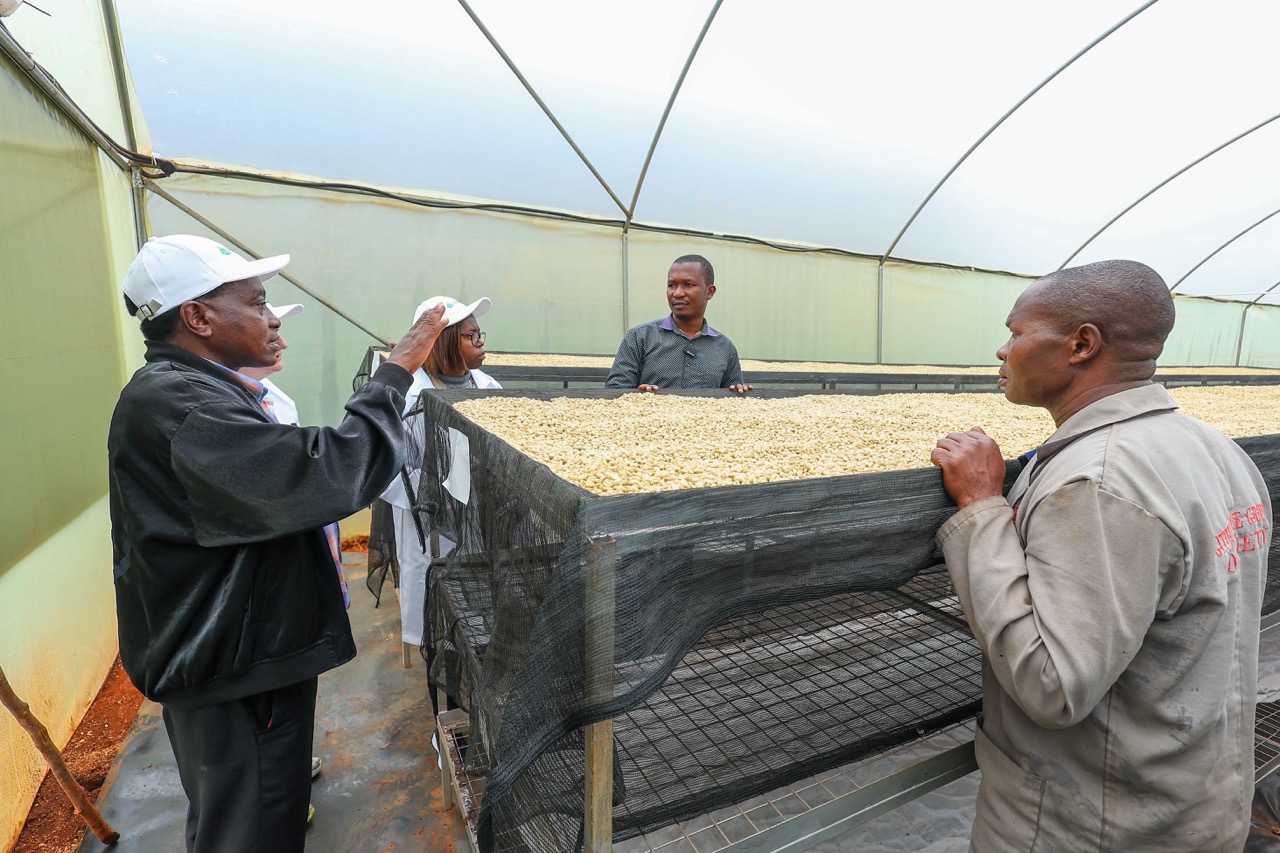
There is a quiet shift underway in how post-harvest infrastructure reaches smallholder farmers in East Africa. Instead of asking every farmer to own equipment, communities are organising around aggregation hubs: shared centres where produce from hundreds of farms is collected, dried, graded and marketed together. Some of the hubs we work with serve more than a thousand farmers from a single site.
For cooperatives, county programmes, NGOs and funders, the hub model deserves serious attention — not because it is fashionable, but because the economics and the quality outcomes are hard to argue with. Here is how it works, and what separates hubs that thrive from hubs that stall.
Why individual drying doesn't scale
A smallholder harvesting a few hundred kilogrammes a season cannot justify owning industrial drying equipment, and open-air drying — mats, roadsides, raised beds — exposes produce to rain, dust, pests and theft while delivering inconsistent quality. The result is documented in the loss statistics: the FAO estimates that roughly 14 percent of food is lost between harvest and retail globally (FAO), and field estimates for perishables in sub-Saharan Africa run considerably higher. We unpacked the local numbers in The Real Cost of Post Harvest Loss in Kenya.
The deeper problem is market access. Buyers who pay premium prices want volume, consistency and traceability — three things no individual smallholder can offer alone, and three things aggregation delivers almost by definition.
The hub model in practice
A drying hub is anchored by one properly sized smart solar dryer — often an industrial-format unit capable of moving several tonnes per week — installed at a point where farmers already deliver produce: a cooperative store, a collection centre, a processing site. Farmers deliver fresh produce and either pay a drying fee per batch or sell to the hub outright. The hub dries to buyer specification, aggregates volume, and negotiates from strength.
One dryer serving hundreds of farmers changes the cost arithmetic completely. The capital cost per farmer served drops to a small fraction of individual ownership, utilisation stays high because the dryer draws from many harvests, and quality becomes uniform because one trained operator runs every batch. High utilisation is also what makes hub financing bankable — a dryer that works year-round services a loan far more comfortably than one that works six weeks a year.
Who runs the hub matters most
The most consistent lesson from hub deployments is that the operator makes or breaks the model. The strongest hubs we see are run either by cooperatives with established member trust, or — increasingly — by youth enterprises that operate the dryer as a business: managing intake, running batches, keeping records and marketing the dried product. Drying is skilled, technology-enabled work with real revenue attached, which makes hub operation one of the more credible pathways for youth employment in agriculture right now.
Whoever operates, three capabilities are non-negotiable: technical training on the equipment (safety first, then operations), quality management to buyer standards, and honest record-keeping so farmers trust the scales and the fees.
What makes hubs succeed
Watching hubs launch across Kenya, Uganda and Ghana, the pattern among the successful ones is consistent. They anchor on an existing farmer organisation rather than building a new one from scratch. They train for markets, not just machines — operators learn buyer quality standards and market linkage alongside dryer operation, because a hub that dries well but sells poorly still fails its farmers. They structure financing to match utilisation, blending grant support, bank asset financing and farmer fees so no single party carries all the risk. And they run on data: batch records, moisture logs and throughput numbers that make performance visible to members, lenders and funders alike.
What funders and programme designers should look for
If you are designing or financing post-harvest interventions, the hub model offers something rare: a single investment whose benefits are measurable across hundreds of households, with a revenue model that can outlive the grant. The due-diligence questions that matter are about the operator and the market as much as the machine. Is there an organised farmer base within delivery distance? Is there a named operator with training and incentives? Is there a buyer, or a credible path to one, for the dried product? And is there a monitoring system that will report utilisation honestly? Where those four answers are yes, drying hubs have shown they can move from pilot to sustainable service — which is ultimately the outcome every programme is looking for.
Frequently asked questions
How many farmers can one hub serve?
It depends on dryer capacity and crop calendar, but a well-utilised industrial-format dryer at an active aggregation point can serve several hundred to over a thousand farmers across a season.
Who owns the dryer in a hub model?
Structures vary: some hubs are cooperative-owned, some are operated by youth enterprises under rent-to-own or asset-financing arrangements, and some begin grant-funded with a planned transition to commercial operation. The constant is a clearly accountable operator.
What crops work best for hubs?
Any crop with volume and a quality-sensitive market: coffee, cereals, cassava and other roots, vegetables, and aromatic crops like ginger and hibiscus. Multi-crop hubs keep utilisation high across seasons.
How do we start a conversation about a hub for our region?
Book a consultation with our team. We support hub design from site survey and sizing through operator training and monitoring, and we are glad to work alongside county programmes, NGOs and funders from the design stage.
Similar posts
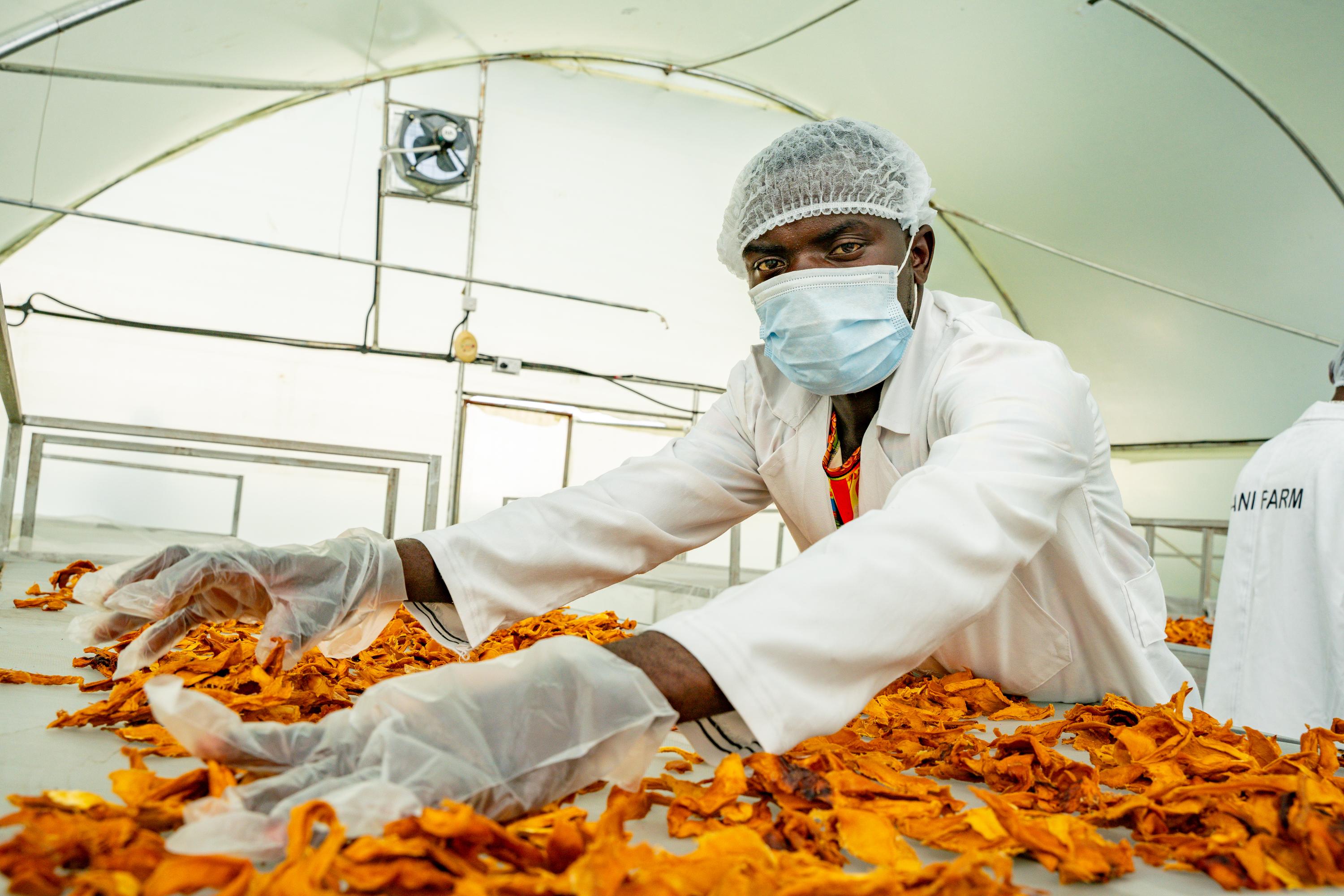
Beyond Maize and Coffee: Drying Cassava, Ginger, Hibiscus and Herbs for Premium Markets
One smart solar dryer can serve many value chains. What it takes to dry cassava, sweet potato, ginger, hibiscus, herbs and vegetables to the standards premium buyers demand.
What Size Solar Dryer Do You Need? A Practical Sizing Guide for Farms and Agribusinesses
From 300 kg walk-in units to industrial dryers moving 8-10 tonnes a week: how to size a smart solar dryer from your harvest volumes, and the questions serious buyers ask before signing a quotation.