
From Installation to First Harvest: What Owning a Smart Solar Dryer Actually Looks Like

Most articles about solar dryers end at the purchase decision. But the questions we hear most from customers come after that point: What happens between paying and drying my first batch? Who trains my team? What if something breaks in month eight? This post walks through the full ownership journey of a Synnefa smart solar dryer — from site survey to daily operation — so you know exactly what to expect.
Step 1: The pre-site survey
Every installation begins with a survey of your site. Our team checks ground conditions and drainage, solar orientation, access for delivery and construction, and how produce will flow in and out of the dryer. This is also where we capture your crop mix and volumes so the internal rack configuration matches how you will actually use the dryer. The survey protects you from the two most common causes of project delay: a site that needs unplanned civil works, and a configuration that doesn't fit the crop.
Step 2: Site preparation and installation
Depending on the survey findings, your site may need light civil works — typically a level, well-drained base — before the structure goes up. Our team then delivers materials, erects the tunnel structure, mounts the solar array and fans, installs the drying racks and connects the sensor and control systems. You will receive a written timeline in your quotation, and larger industrial units naturally take longer than compact farm units. One thing we insist on: the dryer is commissioned and demonstrated working before handover, not simply assembled.
Step 3: Training — safety first, then operations
Training happens in two deliberate phases. Safety training comes before installation work begins, covering everyone who will be on site. Operational training follows commissioning, when your operators learn on their own machine: loading and spreading produce, managing airflow and vents, reading moisture and temperature data, keeping batch records, and the cleaning routines that matter especially for multi-crop and aromatic-crop use. Our experience is blunt on this point: a well-trained operator is worth as much as the hardware. Hubs and farms that invest in operator skill get consistently better quality and higher throughput from the same dryer.
Step 4: Monitoring with FarmCloud
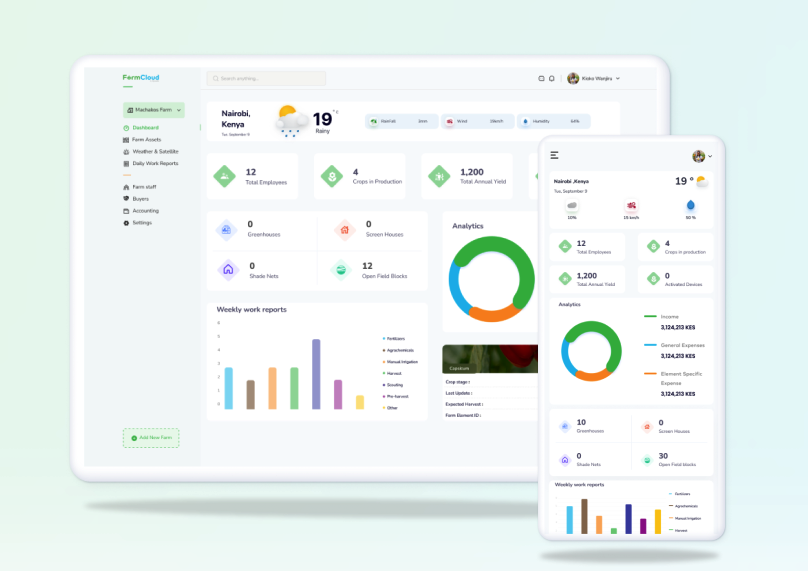
This is where "smart" earns its name. Sensors inside the dryer track temperature, humidity and drying conditions continuously, and the data streams to FarmCloud, our farm management platform, where you can watch batches from your phone. The system flags batches that have been drying without a quality inspection, so you catch the ideal moisture window instead of discovering an over-dried or under-dried batch after the fact. Over time, your batch history becomes a quality record you can show buyers — traceability that increasingly separates premium suppliers from the rest. We wrote more about this shift in why post-harvest management is becoming a data problem.
Step 5: After-sales support and maintenance
A dryer is a long-term asset, and support should be structured accordingly. Synnefa customers get a customer portal where you can track your project from contract through installation, and raise maintenance requests directly — no chasing phone numbers. Warranty terms are stated in your quotation; read them, and ask what is covered, for how long, and how service calls work in practice. Routine care is straightforward — keeping surfaces clean, checking fans and vents, and following the cleaning protocol between crops — and your operators learn all of it during training.
What owners wish they had known
Three recurring lessons from our customer conversations. First, prepare the site early — most installation delays trace back to site readiness, not equipment. Second, train more than one operator — a single trained person becomes a single point of failure the day they travel. Third, use the data from day one — owners who watch their FarmCloud dashboards through the first month learn their dryer's behaviour across weather conditions and reach consistent quality much faster than those who treat monitoring as optional.
Frequently asked questions
How long from payment to first batch?
It depends on dryer size and site readiness — your quotation includes a written timeline covering survey, site preparation, delivery, installation, commissioning and training. Confirming the site-preparation checklist early is the best way to keep the schedule tight.
Do I need an internet connection for FarmCloud?
The dryer's sensors transmit data for remote monitoring, and you view it through FarmCloud on a phone or computer wherever you have connectivity. Talk to us about your site's network situation during the survey and we will configure accordingly.
What does the warranty cover?
Warranty terms are specified in your quotation and vary by component. Ask for them in writing, along with the practical details: response times, spare-part availability and how to log a claim through the customer portal.
What if I want to add capacity later?
Tell us during the survey if growth is on your horizon. Rack configurations can often be extended, and we will advise whether to size up now or expand later. Book a consultation to walk through your plans — or start with our complete guide to solar dryers in Kenya.
Similar posts
Smart Solar Dryers in Kenya: Why Post-Harvest Management Is Becoming a Data Problem
Kenya's solar dryer market is changing. The question for agrienterprises is no longer what dryer to buy — it is whether your operation can afford to keep drying without data.
IoT in Agriculture: How Smart Sensors Are Transforming Farming in East Africa
Smart sensors and IoT technology are reshaping farming across East Africa. Learn how real time monitoring of temperature, humidity, and soil conditions is helping farmers reduce losses and increase yields.